
Bobble
Find books. Follow writers. Talk about what you are reading.
Featured Architecture
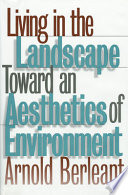
Living in the Landscape
In Living in the Landscape Arnold Berleant explores new ways of thinking about how we live—and might live—in the landscapes that enfold us.
Your reading world on The Globe
Discover your next book. Keep the ones that matter.
Join The Globe for a free reader profile and discover books, writers and stories in one place.
About the book
About Living in the Landscape
In Living in the Landscape Arnold Berleant explores new ways of thinking about how we live—and might live—in the landscapes that enfold us. Through the concepts of "aesthetic engagement" and "environmental continuity," he proposes a new paradigm that offers a holistic approach to the meaning of place and places of meaning in our lives. Although environmental aesthetics is linked in the popular mind to dramatic vistas and monumental landscapes—the Grand Canyon, for example—Berleant is much more concerned with the commonplace settings of everyday life. He argues that our active appreciation of (or "aesthetic engagement" with) the prosaic landscapes of home, work, local travel, and recreation plays a vital role in our discovery of hidden continuities, as well as pleasure and meaning, in the places we inhabit. Berleant begins with a general introduction to environmental aesthetics, identifying the kinds of experience, meanings, and values it involves, and describing its historical sources and the issues with which it is concerned. In the rest of the book, he spotlights new directions in the field—as they relate to education, community, creativity, and the sacred—and provides an insightful analysis of "negative environmental aesthetics." Throughout, he is both thoughtful and entertaining, as evidenced in his extended critique of the pop post-modern environment of Disney World. Berleant addresses issues commonly associated with the environmental movement—e.g., preservation, pollution control, and quality of life. But his study draws from a wide range of disciplines and for that reason should also appeal to scholars and students interested in art and aesthetics, landscape architecture and planning, urban and environmental design, and cultural geography, as well as environmental studies.
Reader conversation
Take this book into Bobble
Are you the author or publisher?
Claim this page to verify the book information, add an author profile, update purchase links or request removal.